
The Hidden Cost of Growth: When to Systemize Your Business Operations


You hit your best sales month ever. Then the wheels started coming off.
Orders got missed. Inventory counts stopped matching reality. You became the one person who actually understood how anything worked — and you were exhausted by it.
If that sounds familiar, you haven't done anything wrong. You've just reached a point almost every growing consumer and lifestyle brand reaches eventually: the systems that got you here can't carry you to what's next.
Before you hire five people or buy a stack of new software to “fix” it, it helps to understand what's actually happening — and where to focus first.
First, What's Actually Breaking?
Scaling business operations feels different than starting them. Problems that were minor at a smaller size — a missed email, a manual spreadsheet, one person handling three jobs — get expensive fast once volume goes up. In our experience working with growing brands, the strain almost always comes down to three patterns, usually overlapping.
1. You're the Bottleneck
Every decision still runs through you. Approving a reorder, resolving a shipping issue, deciding how to handle an upset customer — your team asks first and acts second, because they're not sure what you'd want, or they don't actually have the authority to decide.
Small decisions wait on you, even ones you've made a hundred times before
Your team defaults to “let me check with you” instead of just handling it
Growth adds more hours to your week, not fewer
2. Your Tools Don't Talk to Each Other
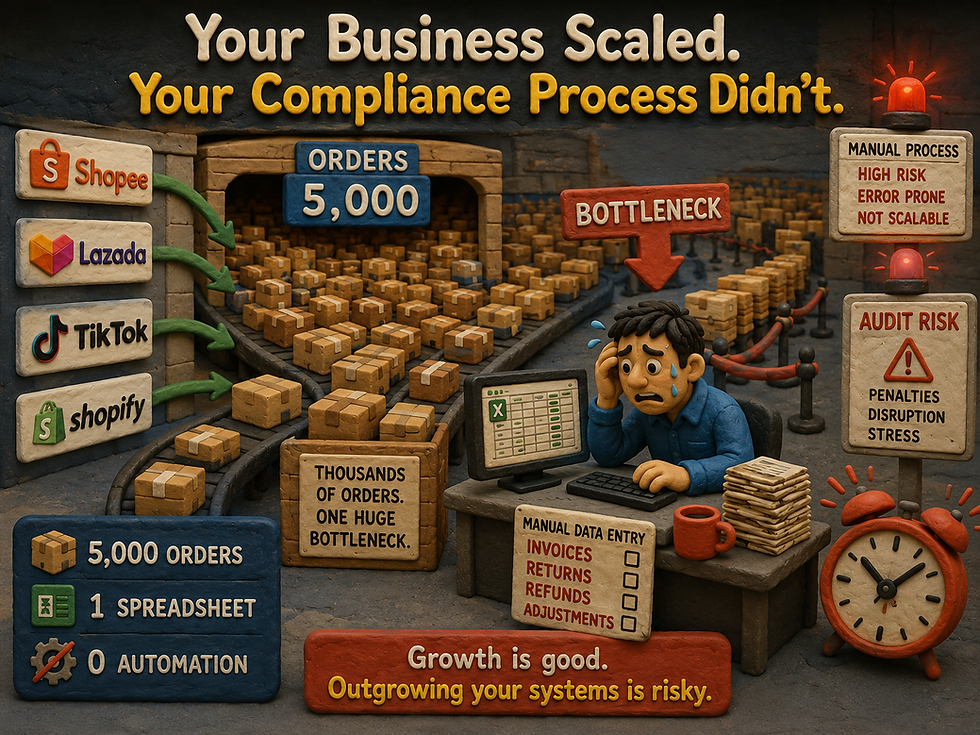
You added a tool every time a problem came up — a spreadsheet for inventory, an app for shipping, a separate inbox for customer messages. None of them share information, so someone on your team has to, manually, every day.
The same order gets entered two or three times, in two or three places
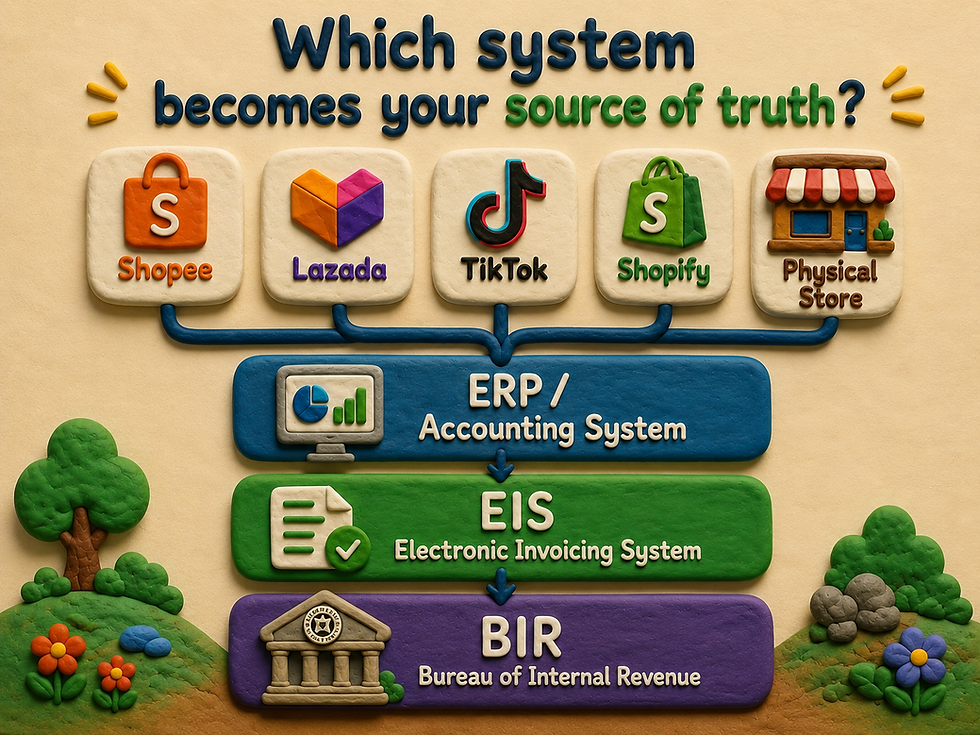
Nobody's fully sure which number — orders, stock, revenue — is the real one
“Checking something” means opening four tabs, not one
3. The Process Lives in Someone's Head
Nothing's actually written down. The real process for handling returns, restocking, or a rush order exists only because one person remembers how it goes.
One employee is the only one who knows how to solve a recurring issue
When they're out sick or on leave, that task just doesn't get done properly
Training a new hire takes weeks longer than it should, because there's nothing to hand them
Most brands are dealing with some mix of all three by the time they notice that growth has started to hurt instead of help.
5 Signs You've Outgrown Your Current Systems
Here's the short version. If more than two of these sound familiar, it's time.
1. You're hearing about problems from customers before your own team catches them. Your systems should flag an issue before the customer emails you about it. If complaints are your early warning system, you don't have one.
2. Your best sales month feels harder than your worst one. Growth should feel like momentum. If a record month leaves you more stressed than proud, your operations — not your demand — are the real constraint.
3. You can't answer “how many do we have left?” without checking three places. If inventory, orders, and fulfillment don't agree with each other, you're not managing stock. You're guessing, with extra steps.
4. New hires take too long to become useful. If ramping someone up depends on shadowing you or another employee for weeks, the process isn't documented. It's memorized, and only by one or two people.
5. You've stopped doing growth work to keep the lights on. Marketing, partnerships, new products — the things that actually grow the business — keep getting pushed aside because you're stuck reconciling orders or chasing a shipment.
What Staying Reactive Actually Costs You
This part doesn't show up on a P&L, at least not directly. But it's real, and it compounds.
Say you're doing ₱150K a month, and one person manually reconciles orders across your website, a marketplace, and a wholesale account every evening. It's tight, but it works. At ₱400K a month, that same process doesn't just take longer — it breaks, because the extra volume exposes every workaround you were quietly relying on to keep it running.
That breakdown tends to show up as:
Burnout. You and your best people absorb the slack, working later to catch what the system should have caught.
Costly mistakes. Wrong items shipped, double charges, stockouts on your best sellers — errors that used to be rare and are now routine.
Slower everything. Response times creep up. Fulfillment slips a day, then two. Customers notice before you do.
Missed opportunities. The wholesale account that wanted to double their order, the retailer that reached out — you don't have the bandwidth to chase it, so it quietly goes nowhere.
None of this happens because you're bad at running your business. It happens because the business outgrew the systems running it, and nobody stopped to rebuild them.
How to Audit What Needs Systemizing First
You don't need a full operational overhaul. You need to know where to start. Here's a simple way to find out.
Step 1: Map What's Actually Happening
Write down your real process for your three or four highest-volume workflows — order to fulfillment, customer service, restocking, returns. Not how it's supposed to work. How it actually works, workarounds included.
Step 2: Flag Where It Breaks
Go through each map and mark where things go wrong: where you personally have to step in, where information gets re-entered, where mistakes tend to happen. These are your operational bottlenecks.
Step 3: Rank by Impact, Not Urgency
The loudest problem isn't always the most expensive one. Rank your bottlenecks by how many orders, customers, or dollars they touch — not by whichever one is currently on fire. Fix the ones with the biggest reach first.
How to Systemize Without Slowing Down Growth
It's tempting to want to fix everything at once — a new inventory system, a new CRM, a reorganized team, all in the same quarter. Resist that.
Here's the truth: you don't need a perfect system. You need the one that removes your biggest bottleneck right now.
Start with whichever process touches the most orders, the most customers, or the most revenue. For most growing consumer and lifestyle brands, that's order-to-fulfillment or customer service — the two places where a breakdown is most visible to the person paying you.
Fix that one properly. Document it. Give someone other than you clear ownership of it. Build in a simple way to catch errors before they reach the customer. Then move to the next bottleneck on your list.
This is also where a lot of brands get systemizing wrong — they buy software before they fix the process. A new tool won't save a broken process; it just helps you make the same mistakes faster. Streamline the workflow first. Then decide what tool, if any, actually supports it.
Final Thoughts
Growth isn't the problem. Growing without the systems to support it is.
Fix one process at a time. Document it as you go. Hand off what shouldn't be on your plate anymore. You'll feel the difference before your revenue chart does.
If you're not sure where to start — That's the role Agyle Brands likes to play — not just pointing out what's broken, but working alongside you to build the systems that let you keep growing without burning out your team, or yourself.


Comments